

 Medically Reviewed
Written by Pooja Rawat, Medical Content Writer
Posted On: 08 Jun 2026, Updated On: 21 Aug 2026
Fatty liver disease is no longer a “rare liver issue.” Today, millions of people are being told during routine ultrasound tests that they have grade 1 fatty liver, mild hepatomegaly, or early fatty infiltration of the liver, often without any symptoms at all.
The good news? In most cases, especially in early stages, fatty liver is reversible.
For early fatty liver treatment, specialists focus entirely on lifestyle modifications (sustainable weight loss, dietary changes, and consistent physical activity) to help the liver naturally heal itself.
Your doctor may recommend specific medical interventions for early stages:
However, advanced-stage fatty liver (cirrhosis or MASH with severe fibrosis) requires aggressive, specialized medical care. Liver specialists focuses on halting disease progression, managing severe complications, and preventing liver failure
Read this blog to understand:
This guide explains fatty liver treatment costs, diagnosis tests, specialist consultation, and modern treatment options in India for 2026.
Grade 1 fatty liver (or grade 1 fatty infiltration of liver) is the earliest and mildest stage of fatty liver disease where small amounts of fat begin accumulating inside liver cells.
Think of the liver like a kitchen sponge.
A healthy sponge absorbs and releases water normally. But if oil slowly starts collecting inside it, the sponge becomes heavier and less efficient. That is similar to what happens in fatty liver disease.
In grade 1 fatty infiltration of liver, fat buildup is mild and liver function is often still preserved.
Many people search:
“is grade 1 fatty liver curable?"
The answer is encouraging: Yes — grade 1 fatty liver is often reversible with lifestyle changes.
Is Grade 1 Fatty Liver Harmful?
Usually, grade 1 fatty liver is not immediately dangerous. But it is a metabolic warning sign.
If ignored for years, it can progress through stages:
| Stage | What Happens |
| Grade 1 fatty liver | Mild fat accumulation |
| MASH/NASH | Fat + inflammation |
| Fibrosis | Liver scarring begins |
| Cirrhosis | Permanent liver damage |
| Liver failure/cancer | Advanced disease |
This is why doctors now recommend early intervention instead of waiting for symptoms.
If you are wondering, “How Do You Know if You Have Fatty Liver?” To know if you have it, doctors usually uncover it through routine blood work, imaging tests, or when investigating risk factors like obesity, high cholesterol, or type 2 diabetes.
In some reports, ultrasound may mention:
This simply means the liver is slightly enlarged due to fat accumulation.
Most people with early fatty liver have no symptoms.
Some may experience:
Why Fatty Liver Is Increasing So Rapidly
Modern lifestyle is one of the biggest reasons.
Common risk factors include:
Interestingly, even non-drinkers can develop fatty liver. That condition is now called:
(Metabolic Dysfunction-Associated Steatotic Liver Disease)
Earlier, it was called NAFLD.
Doctors usually begin with basic blood tests and imaging.
These help assess liver function and metabolic health.
| Test | Purpose | Approximate Cost |
| LFT (ALT, AST, bilirubin) | Liver inflammation | ?300–?1,200 |
| CBC | Infection/anemia check | ?200–?600 |
| Lipid profile | Cholesterol/triglycerides | ?400–?1,500 |
| HbA1c | Diabetes screening | ?500–?1,500 |
| PT/INR | Liver clotting function | ?300–?800 |
These are usually repeated during follow-up.
This is the most common first-line test.
An ultrasound can detect:
Typical Cost:
?1,000–?3,000
Most people discover fatty liver accidentally during routine health checkups.
FibroScan measures liver stiffness and estimates fibrosis risk.
Think of it like checking whether the liver is becoming “hard” due to scarring.
| Test | Why It Matters | Approximate Cost |
| FibroScan | Detects fibrosis/cirrhosis risk | ?2,500–?7,000 |
This test is especially useful in:
These are not needed for everyone.
Doctors may advise them if:
Typical Cost:
Many people are confused whether to see:
Here’s the simplest breakdown:
| Specialist | When to Visit |
| Family doctor | First abnormal LFT or ultrasound |
| Gastroenterologist | Persistent fatty liver or symptoms |
| Hepatologist | Fibrosis, cirrhosis, advanced disease |
| Endocrinologist | Diabetes/metabolic syndrome |
| Dietitian | Weight-loss planning |
Consultation fees vary depending on city and hospital.
| Consultation Type | Approximate Cost |
| General physician | ?500–?1,500 |
| Gastroenterologist | ?800–?3,000 |
| Hepatologist | ?1,500–?5,000 |
Metro cities like Delhi NCR, Mumbai, Bengaluru, and Hyderabad are usually at the higher end.
Many people search:
“fatty liver grade 1 treatment”
The most important thing to understand is:
there is no magic “fatty liver tablet.”
Treatment mainly focuses on reversing the root metabolic problem.
This is the most effective treatment.
Even:
7–10% weight loss
can significantly reduce liver fat and inflammation.
For many patients, this alone improves grade 1 fatty liver.
Doctors usually recommend:
Many patients also search:
“fatty liver grade 1 in Hindi”
In simple Hindi:
“Fatty liver ka matlab hai liver mein charbi jama hona. Shuruaati stage mein diet aur exercise se ise reverse kiya ja sakta hai.”
Aim for:
At least:
150 minutes per week
Exercise improves insulin sensitivity and reduces liver fat even before major weight loss happens.
Even mild alcohol intake can worsen fatty liver progression in some patients.
If alcohol-related fatty liver is suspected, complete avoidance is often advised.
Fatty liver is strongly connected to:
Doctors may prescribe:
The treatment landscape is rapidly changing.
A newer medicine called:
Resmetirom has now been approved in some regions for selected MASH patients with fibrosis.
The U.S. Food and Drug Administration has also approved Wegovy (semaglutide) injection to treat metabolic-associated steatohepatitis (MASH) in adults with moderate-to-advanced fibrosis (excessive scar tissue in the liver).
Researchers are also studying:
However:
lifestyle treatment remains the foundation.
This is one of the most searched questions.
Yes — in many patients, grade 1 fatty liver is reversible.
Especially if:
The liver has remarkable healing capacity when damage is addressed early.
Early fatty liver management is relatively affordable.
But advanced disease becomes extremely expensive.
| Early Stage | Advanced Disease |
| OPD consultations | ICU admissions |
| Blood tests + ultrasound | CT/MRI + biopsy |
| Lifestyle management | Liver transplant |
| Low to moderate cost | Multi-lakh expenses |
In India, liver transplant costs may range roughly:
That is why early intervention matters medically and financially.
Here are practical ways patients can save their healthy as well as money:
Prevention is significantly cheaper than advanced liver care.
Fatty liver disease is common, silent, and often reversible — especially in the early stages like grade 1 fatty liver.
The biggest mistake many people make is ignoring it because they “feel normal.”
But fatty liver is not just a liver issue. It is closely linked with:
The good news is that early lifestyle changes can dramatically improve outcomes and reduce future healthcare costs.
If your report mentions:
don’t panic — but don’t ignore it either.
Early action is usually the simplest, safest, and most affordable treatment.
If you’re searching for the best fatty liver treatment in Lucknow, consulting an experienced liver specialist can make a significant difference in diagnosis, treatment planning, and recovery.
You can connect with experts like Dr. Abhishek Yadav, a highly experienced specialist in liver and HPB surgery, known for handling complex liver cancer cases with advanced treatment approaches.
How to contact Dr. Abhishek Yadav?
You can contact us at:
Q1: What is the best diet for fatty liver?
A: The Mediterranean diet is best: eat fruits, veggies, whole grains, lean proteins, olive oil, and nuts while avoiding sugar, refined carbs, and processed foods.
Q2: How to heal the liver naturally?
A: Healing the liver naturally relies on eliminating harmful substances and adopting lifestyle habits that allow this resilient organ to regenerate its cells.
Here are some evidence-based steps to naturally heal and support your liver: Lose 7–10% body weight; exercise regularly; incorporate antioxidant-rich foods like leafy greens, cruciferous vegetables (broccoli, Brussels sprouts), and healthy fats (olive oil, walnuts, and fatty fish like salmon); avoid alcohol; and choose whole foods over processed ones.
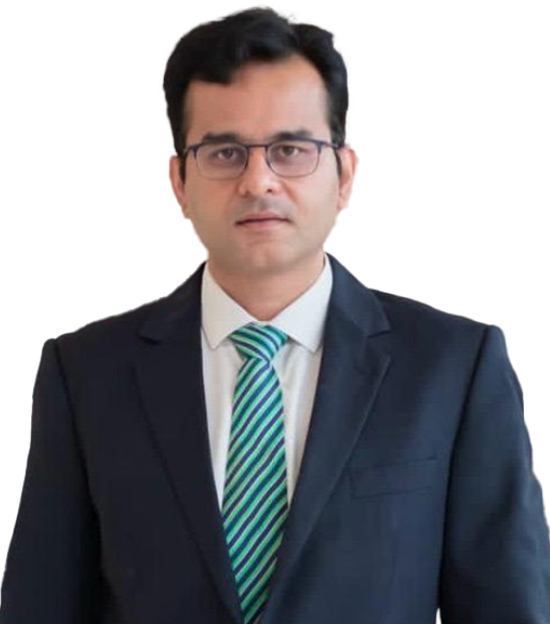
Consultant & Director - HPB Surgery & Liver Transplantation
Meet the doctor